Okay so while making myself a study guide I have discovered I was in fact missing one of my blog entries. This is the one I wrote that disappeared on I think. Luckily it only requires a brief answer.
According to Brandon Joseph, what effects did the Exploding Plastic Inevitable have on spectators? How is this similar or different from the films (such as Vinyl and Mario Banana) projected individually, as we have seen them in class?
Well to put is simply the answer is overwhelmed. The audience had never seen something like it before. All these films back to back to back. It was both powerful and according to some "perverse."
I understand the desire to allow your senses to be overwhelmed, but at the same time there is something almost superfluous about it. Can you really comprehend avant-garde if you see tons of it at once. Avant-garde is in a manner so difficult that without the safe nest of a class room to talk about it afterward it becomes just images. But then sometimes that is a good thing too.
Sunday, May 4, 2008

Monday, April 28, 2008
Live Cinema
Summarize Mia Makela's five essential elements of Live Cinema, and relate these elements to the Live Cinema Explosion during Avant-Garde Night at the Lumina Theater.
The five essential elements of live cinema are space, time, projection, performance and participation.
Spaces refers to digital space as in how much room an object takes on your computer. Also it refers to desktop space or the programs and manners from which a VJ picks his videos from. Performance Space refers literally to the location of the performance and has an effect on the performance as a whole piece. Projection Space refers to the location of the projectors. Am I being too obvious? Physical Space, which is not as obvious, is the distance between the audience and the performers. In Lumina I am not too sure about the activities related to digital or desktop space, but the performance space was Lumina Theater, the projection space was from behind the theater and from the sides and there was basically very little Physical Space.
Time refers to the difference in seeing live cinema being seen live versus the act of viewing a film that has already been made. Both carry with them specific advantages and and disadvantages. The other way the writer refers to time is through the use of loops, which effect both viewers response and film maker response. In Lumina many people left during the films, because they did not feel compelled to sit through films they did enjoy, yet during Live Cinema less people left feeling obligated to stay, one consequence of "live cinema versus usual cinema."
Projection refers to spatial projection, meaning how the place you are in effects your viewing of the film. Also it refers to Media Facade, a concept I relate best to seeing a piece in the Guggenheim museum which is simply a call for peace in various languages hanging from the wall. At our presentation the idea of projection was not something that was obvious to me at the time. Yes we projected from various projectors throughout the room, but there was something very traditional about the literal space of the place we were in. I have to say this concept is extremely interesting, but I think projection doesn't really need its own category. Would it not fit more precisely in the category of Space? I am probably not right, just a causal observation on my part.
Performance refers, to well, the performers. In the case of live cinema the VJ's who work behind the laptops. Also it is refers to a concept the writer calls "liveness." Basically how the well "live" nature of the things, causes the things effect. HMMMM...maybe that only makes sense in my brain. Gesteral interfaces are the ways in which the performers become a part of the creation with the use of their bodies., with things like sensors. In Lumina there was certainly a profound sense of vitality, a code word for "liveness" throughout the performance and I personally think our VJ's did a fine job.
Participation is quite simply the way the audience responds and interacts with the piece. In Lumina the some of the audience was given instruments to make make "music" with. This added to the awareness and power of the piece.
The five essential elements of live cinema are space, time, projection, performance and participation.
Spaces refers to digital space as in how much room an object takes on your computer. Also it refers to desktop space or the programs and manners from which a VJ picks his videos from. Performance Space refers literally to the location of the performance and has an effect on the performance as a whole piece. Projection Space refers to the location of the projectors. Am I being too obvious? Physical Space, which is not as obvious, is the distance between the audience and the performers. In Lumina I am not too sure about the activities related to digital or desktop space, but the performance space was Lumina Theater, the projection space was from behind the theater and from the sides and there was basically very little Physical Space.
Time refers to the difference in seeing live cinema being seen live versus the act of viewing a film that has already been made. Both carry with them specific advantages and and disadvantages. The other way the writer refers to time is through the use of loops, which effect both viewers response and film maker response. In Lumina many people left during the films, because they did not feel compelled to sit through films they did enjoy, yet during Live Cinema less people left feeling obligated to stay, one consequence of "live cinema versus usual cinema."
Projection refers to spatial projection, meaning how the place you are in effects your viewing of the film. Also it refers to Media Facade, a concept I relate best to seeing a piece in the Guggenheim museum which is simply a call for peace in various languages hanging from the wall. At our presentation the idea of projection was not something that was obvious to me at the time. Yes we projected from various projectors throughout the room, but there was something very traditional about the literal space of the place we were in. I have to say this concept is extremely interesting, but I think projection doesn't really need its own category. Would it not fit more precisely in the category of Space? I am probably not right, just a causal observation on my part.
Performance refers, to well, the performers. In the case of live cinema the VJ's who work behind the laptops. Also it is refers to a concept the writer calls "liveness." Basically how the well "live" nature of the things, causes the things effect. HMMMM...maybe that only makes sense in my brain. Gesteral interfaces are the ways in which the performers become a part of the creation with the use of their bodies., with things like sensors. In Lumina there was certainly a profound sense of vitality, a code word for "liveness" throughout the performance and I personally think our VJ's did a fine job.
Participation is quite simply the way the audience responds and interacts with the piece. In Lumina the some of the audience was given instruments to make make "music" with. This added to the awareness and power of the piece.
What are the challenges facing "laptop performers" in relation to audience expectations about "liveness" and performance? How are some artists addressing these challenges?
Audiences have come to expect that films are made before performances of them and there is a sort of desire for the artist to prove that what they are making is in fact, live cinema. In London a group called Slug projects both the performance and the performer to insure a truly live experience. However, considering that this may affect the audience to not fully appreciate the full effect of the show by focusing on the proving process; another group actually shows the audience live and records it in order to make the process both of proving liveness and fully being engaged without having the burden of proving its liveness. That last sentence, had it included longer words, may be well worthy of Fried's approval.
Interesting read. Easier to understand the some things we have read. However, despite her passion for her craft and despite the amazing feeling I got upon seeing live cinema, I am still not sure if we should really call it "film." Sure it utilizes methods of film makers and the physical stuff of film, but their is something about it that is too different, too unique, to be called "film." Perhaps I say this because in my heart of hearts, despite both enjoying and appreciating my own live cinema experience, I can't beat the feeling of seeing a good ol' fashioned film. Live cinema is fun, but for me on a personal level its not the same experience. Live cinema is the roller coaster, and the cinema I love is the penetrating, powerful stuff the haunts your dreams and lives in you not from showy liveness, but from the quiet and assured cinematic presence. I am positive, in an attempt to not sound like Freid, that some people do honestly feel the reverse is true for them in their own lives. The only reason I say this, is that I just do not think they are in the same category. Yes, I know this article is about drawing distinctions, but I think perhaps, and I am fully aware of the dogmatic nature of what I am saying, that maybe we should just call them both something else. Cinema and Live VJ performance? Well, I will work on the absurd and pointless practce of defining art into subcategories later.
Audiences have come to expect that films are made before performances of them and there is a sort of desire for the artist to prove that what they are making is in fact, live cinema. In London a group called Slug projects both the performance and the performer to insure a truly live experience. However, considering that this may affect the audience to not fully appreciate the full effect of the show by focusing on the proving process; another group actually shows the audience live and records it in order to make the process both of proving liveness and fully being engaged without having the burden of proving its liveness. That last sentence, had it included longer words, may be well worthy of Fried's approval.
Interesting read. Easier to understand the some things we have read. However, despite her passion for her craft and despite the amazing feeling I got upon seeing live cinema, I am still not sure if we should really call it "film." Sure it utilizes methods of film makers and the physical stuff of film, but their is something about it that is too different, too unique, to be called "film." Perhaps I say this because in my heart of hearts, despite both enjoying and appreciating my own live cinema experience, I can't beat the feeling of seeing a good ol' fashioned film. Live cinema is fun, but for me on a personal level its not the same experience. Live cinema is the roller coaster, and the cinema I love is the penetrating, powerful stuff the haunts your dreams and lives in you not from showy liveness, but from the quiet and assured cinematic presence. I am positive, in an attempt to not sound like Freid, that some people do honestly feel the reverse is true for them in their own lives. The only reason I say this, is that I just do not think they are in the same category. Yes, I know this article is about drawing distinctions, but I think perhaps, and I am fully aware of the dogmatic nature of what I am saying, that maybe we should just call them both something else. Cinema and Live VJ performance? Well, I will work on the absurd and pointless practce of defining art into subcategories later.
Monday, April 21, 2008
Avant-Garde Cienma Night
I really had a great time at the avant-garde cinema night. My favorite film was the stock broker film, though I fear we may have offended certain Asian members of the audience. My least favorite film was There is A Pervert in the Pool. It simply doesn't interest me at all. I thought, to put it too simply, it was lame.
Cinema explosion was an amazing time that I wish I could have been more involved with. It reminded of something like it must have felt like to be a member of the early avant-garde community in the Village. Maybe its not always easy to understand the films that came from that era, but seeing something like Live Cinema Explosion in action and allowing the audience to be involved in its creation, felt exciting and new. Perhaps that feeling, as base and simple as it is, is the reason why early avant-garde artists even made films to start with. I know that is a gross overstatement, but I feel closer to those artists now.
Cinema explosion was an amazing time that I wish I could have been more involved with. It reminded of something like it must have felt like to be a member of the early avant-garde community in the Village. Maybe its not always easy to understand the films that came from that era, but seeing something like Live Cinema Explosion in action and allowing the audience to be involved in its creation, felt exciting and new. Perhaps that feeling, as base and simple as it is, is the reason why early avant-garde artists even made films to start with. I know that is a gross overstatement, but I feel closer to those artists now.
Saturday, April 12, 2008
And some stuff about Tomb Raider...or why I wasted the entire 13th year of my life
What are the general claims about the film as a rejection of modernist aesthetics? (anti-art, feminism, etc.)
First of all Wess says that Awesh uses a system of deconstruction and defamaliaraztion. In other words she take the everyday video game character of Laura Croft and plays with our presumptions of what it means to be Laura, or what means to play a video game. Like all postmodernist her work would be seen as frivolous to modernist and in some ways anti-feminist.
How does he support these general claims with evidence from the film itself?
He mentions certain aspects from within the film, like the voice over narration. The most striking part seems to be the way Ahwesh keeps letting Laura die. As a viewer this is both frustrating and interesting. Also he compared the film to Maya Deren's masterpiece Meshes in the Afternoon.
To what degree does the analysis correspond with your own?
For the first time in the whole article his presumptions about feminism actually make sense. The rest of what he said all sounded pretty in line with what we have learned so far in the class. This is a small point, but while I understand after he explains it the connection between Deren and Ahwesh, I think that maybe this is too much of a jump. It is jump seemingly based on nothing, which while interesting, makes me question how sound his conclusions are. Also to claim that Meshes in the Afternoon, one the few avant-garde films that I passionately love is dated, well that is just wrong.
First of all Wess says that Awesh uses a system of deconstruction and defamaliaraztion. In other words she take the everyday video game character of Laura Croft and plays with our presumptions of what it means to be Laura, or what means to play a video game. Like all postmodernist her work would be seen as frivolous to modernist and in some ways anti-feminist.
How does he support these general claims with evidence from the film itself?
He mentions certain aspects from within the film, like the voice over narration. The most striking part seems to be the way Ahwesh keeps letting Laura die. As a viewer this is both frustrating and interesting. Also he compared the film to Maya Deren's masterpiece Meshes in the Afternoon.
To what degree does the analysis correspond with your own?
For the first time in the whole article his presumptions about feminism actually make sense. The rest of what he said all sounded pretty in line with what we have learned so far in the class. This is a small point, but while I understand after he explains it the connection between Deren and Ahwesh, I think that maybe this is too much of a jump. It is jump seemingly based on nothing, which while interesting, makes me question how sound his conclusions are. Also to claim that Meshes in the Afternoon, one the few avant-garde films that I passionately love is dated, well that is just wrong.
Sunday, April 6, 2008
Oh the little differences: Early 70's avant-garde vs. No Wave
What are some similarities and differences between the American avant-garde of the early 1970s and the Punk or No Wave film making in the late 1970s? Address the following areas:
Aesthetic similarities and differences (which filmmakers do the cite as influences, which filmmakers do they reject?)
The member's of the No Wave part of cinema found inspiration from the likes of French directors like Goddard, Truffaut and Rohmer. This artists, instead of rejecting of traditional Hollywood narrative, took them and altered them to meet their own unique auteur principle. Early 1970's is different as it is a rejection of all things Hollywood and the brain child of the art world and the academy.
The member's of the No Wave part of cinema found inspiration from the likes of French directors like Goddard, Truffaut and Rohmer. This artists, instead of rejecting of traditional Hollywood narrative, took them and altered them to meet their own unique auteur principle. Early 1970's is different as it is a rejection of all things Hollywood and the brain child of the art world and the academy.
Technological similarities and differences
Both styles of cinema depended on cheapness, which I will mention later. However what makes them so different is the advent and use of a new camera, the Super 8. The Super 8 shots on near the same quality as the average home video and is just as easy to operate. Early 70's avant-garde has become more, shall we say "fancy," where as the the new technology allowed for the very Fluxus type idea that anyone could make film.
Both styles of cinema depended on cheapness, which I will mention later. However what makes them so different is the advent and use of a new camera, the Super 8. The Super 8 shots on near the same quality as the average home video and is just as easy to operate. Early 70's avant-garde has become more, shall we say "fancy," where as the the new technology allowed for the very Fluxus type idea that anyone could make film.
Economic similarities and differences
As I said earlier both depended somewhat on cheap means of creation. However, punk creation was even cheaper. The super 8 made is possible for almost anyone to create works of punk art. Of course as we have learned "art" is to many folks, a relative term.
As I said earlier both depended somewhat on cheap means of creation. However, punk creation was even cheaper. The super 8 made is possible for almost anyone to create works of punk art. Of course as we have learned "art" is to many folks, a relative term.
Social similarities and differences
The art of early 70's avant-garde was considered by many to extremely formalized. Punks, as they so often do, chose to reject this. No Wave cinema is often more angry. Its anger is directed at society in general but more accurately at the art world which pins art into black boxes and demands that it follows its rule. However like early 70's avant garde some punks were in fact considered with the production and style of their films. To put it in another way, while punks may have tried harder to make political and social statements, it would be over stepping to say the early 70's avant-garde film makers were not doing the same thing in their own unique ways.
The art of early 70's avant-garde was considered by many to extremely formalized. Punks, as they so often do, chose to reject this. No Wave cinema is often more angry. Its anger is directed at society in general but more accurately at the art world which pins art into black boxes and demands that it follows its rule. However like early 70's avant garde some punks were in fact considered with the production and style of their films. To put it in another way, while punks may have tried harder to make political and social statements, it would be over stepping to say the early 70's avant-garde film makers were not doing the same thing in their own unique ways.
Saturday, March 29, 2008
The Academy and then Avant-garde: A probelmatic romance

What have been the major critiques of the "academicization" of the American avant-garde film? Give your own response to these critiques in relation to the films and readings from our class.
There seem to be many specific criticisms on the “academicization” of American avant-garde. However the prevailing sentiment seems to more a subject of nostalgia. After all, avant-garde cinema is about stepping outside the normal means, about leaving narrative structures behind and in many cases, the democratization of art. If these types of cinema exist within the world of the academic then the films give up a piece of their very essence. However, as the writer of this article notes more than once, it is the academy that has held the community of the avant-garde together and academy for which the future of avant-garde will rest. Let’s take a look the some the more specific criticism made mention of in the article.
Cannon Formation: This problem is one I understand and can relate to. The writer writes than only certain filmmakers, like Andy Warhol, get mentioned while others are left out. He mentions how in the process of canonization many important things are left out, such as the contribution of women. In my personal opinion, even in the study of the main stream cinema many important figures of cinema are set aside so that we may closer study something else. For example, if I watch Citizen Kane or anything else in the oeuvre of Orson Wells again I may spontaneously combust.
Freedom of Expression: Does a university setting limit the artistic freedom of those who would wish to study, to teach or create controversial anti-establishment art? Those who criticize this method of academicization would say so. I, a student who recently watched defecation on screen, would have to disagree.
Political Irrelevance: This is bit confusing to me. Basically the criticism is that the academy will over politicize a film and thus render it outside of its original aesthetic intentions. In other words by making the films into something they are not it makes them unapproachable and maybe artless. But as the writer points out many of the films simply aren’t approachable and make little to no sense to even the trained viewer, without a bit of academic and critical help in the explanation of their very existence.
In relation to this class I can not help but note that the very existence of this class is contradictory to many of the artists and critics in the avant-grade movement. However, at the same time I would never have considered or bothered to learn about much of the film we have watched in this class without the class. I might even brush them off as flawed attempts for shock value or narrative homicide, but with scholarly observation the true meaning of many of the films can be found.
To sum the articles up and my agreement with them is one simple phrase my grandfather uses every day; “Don’t bite that hand that feeds you.” Without the academy I am not sure avant-garde could sustain itself. Yes, sometimes the real world forces avant-garde film makers to bend their moral limits and accept some kinds of government funds, or worse, the impute of the evil corporation, but this is sadly enough, just the nature of the beast.
Sunday, March 16, 2008
Art and Objecthood (Week Eight, I think)
I am not quite sure if this is the post from last week or for this week, but here we go. The question.
The answer I want to propose is this: the literalist espousal of objecthood amounts to nothing more than a plea for a new genre of theatre; and theatre is now the negation of art. Literalist sensibility is theatrical because, to begin with, it is concerned with the actual circumstances in which the beholder encounters literalist work."
If this is Fried's answer, what is his question? Why does he object to what he calls "objecthood," "theatricality," and "literalist" work?
To quote the article the question asked is "What is it about objecthood as projected and hypothesized by the literalist that makes it , if only from the perspective of recent modernist painting, antithetical to art?"
Before moving forward let's look at what exactly the question even means. The writer mentions that to him objecthood is "non-art." Painting, not from a literalist perspective, is too restrictive because it is limited to one plane, therefore with three-dimensionality it becomes something more likely to please the literalist, but ultimately it too fails.
Still I confess this whole article causes nothing much more than confusion. However considering what I just said allow me to explain it in a manner that I think is close to what the article is trying to say.
Because literalist work is so caught up in the way it is presented and received, it is less art and more theatre. Although not necessarily theatre which is art, but the showyness, the literalist ability to evoke something in viewers that is like the way theatre is perceived. So when you go to a gallery and see art, literalist art I mean, you are actually going to experience something, instead of actually, you know, seeing art.
So if this is the answer and the question. There still remains another question. What does he say is his problem with this system? Well I think, even though he spends what I feel are entirely too many pages to say this, basically if literalist art exists to be showy and not to be art, then it is needlessly at war with other art and isn't art.
Okay so, because I am having a bit of trouble explaining it, allow to me to pull an example from own life and in some ways make a point in favor of this writers. When I got the chance to go to the Guggenheim museum in Bilbao, Spain I recall being very excited to see great works of modernist art. The ones I recall most were these very large circular pieces of metal. They were all in a spiral shapes and they were all amazing. You couldn't help but be drawn to them in a truly theatrical way. However, in spite of the power of the emotions that overwhelmed me, I mostly felt an overly serious sense of "neat." But the whole experience for me, was somewhat, artless. Not detached in any way, but theatrical.
Thus art, according to this author, is the opposite of "objecthood." Objecthood then, is "non-art." So strangely a correct, overly simplified summary of this article could be. The opposite of art is "non-art." This is somewhat amusing to me. And like always, even though I think the writer has very valid points, I can't help but be weary of anyone who goes out of there way to define art as a particular thing.
Art is, as the old adage goes "in the eye of the beholder." Hmm...does that statement, as I have often wondered, sound hypocritical?
The answer I want to propose is this: the literalist espousal of objecthood amounts to nothing more than a plea for a new genre of theatre; and theatre is now the negation of art. Literalist sensibility is theatrical because, to begin with, it is concerned with the actual circumstances in which the beholder encounters literalist work."
If this is Fried's answer, what is his question? Why does he object to what he calls "objecthood," "theatricality," and "literalist" work?
To quote the article the question asked is "What is it about objecthood as projected and hypothesized by the literalist that makes it , if only from the perspective of recent modernist painting, antithetical to art?"
Before moving forward let's look at what exactly the question even means. The writer mentions that to him objecthood is "non-art." Painting, not from a literalist perspective, is too restrictive because it is limited to one plane, therefore with three-dimensionality it becomes something more likely to please the literalist, but ultimately it too fails.
Still I confess this whole article causes nothing much more than confusion. However considering what I just said allow me to explain it in a manner that I think is close to what the article is trying to say.
Because literalist work is so caught up in the way it is presented and received, it is less art and more theatre. Although not necessarily theatre which is art, but the showyness, the literalist ability to evoke something in viewers that is like the way theatre is perceived. So when you go to a gallery and see art, literalist art I mean, you are actually going to experience something, instead of actually, you know, seeing art.
So if this is the answer and the question. There still remains another question. What does he say is his problem with this system? Well I think, even though he spends what I feel are entirely too many pages to say this, basically if literalist art exists to be showy and not to be art, then it is needlessly at war with other art and isn't art.
Okay so, because I am having a bit of trouble explaining it, allow to me to pull an example from own life and in some ways make a point in favor of this writers. When I got the chance to go to the Guggenheim museum in Bilbao, Spain I recall being very excited to see great works of modernist art. The ones I recall most were these very large circular pieces of metal. They were all in a spiral shapes and they were all amazing. You couldn't help but be drawn to them in a truly theatrical way. However, in spite of the power of the emotions that overwhelmed me, I mostly felt an overly serious sense of "neat." But the whole experience for me, was somewhat, artless. Not detached in any way, but theatrical.
Thus art, according to this author, is the opposite of "objecthood." Objecthood then, is "non-art." So strangely a correct, overly simplified summary of this article could be. The opposite of art is "non-art." This is somewhat amusing to me. And like always, even though I think the writer has very valid points, I can't help but be weary of anyone who goes out of there way to define art as a particular thing.
Art is, as the old adage goes "in the eye of the beholder." Hmm...does that statement, as I have often wondered, sound hypocritical?
Thursday, March 13, 2008
The Lives of Perfomers
I should have written this earlier, before we discussed it in class. However, I am going to try and make this post as organic as possible and say what I was I was thinking about this film when I first finished watching it. It was a profound relief, like breathing again after an asthma attack or finding water in an endless desert. At last the long and arduous process of watching the film was over.
If The Lives of Performers is art posing as science, than as science it still infuriates me to some small degree. In other words, even now upon understanding the intentions of her film it seems more like an experiment than a completed actual film.
Now, having read all the articles about it and having discussed it in small group I believe my initial issue with the film as being too much like science was a fair criticism. After all, like a great deal of those things that are avant-garde, the films are like tests. And the outside of that, as we discussed in class I also think the film failed on its own terms.
It wasn't the worst film I have ever seen (Crash holds that very special distinction) but I would certainly never want to endure it again.
I don't doubt the infamous imdb guy's claim that the audience walked out. I don't walk out on movies, ever, but I could certainly see why someone would.
If The Lives of Performers is art posing as science, than as science it still infuriates me to some small degree. In other words, even now upon understanding the intentions of her film it seems more like an experiment than a completed actual film.
Now, having read all the articles about it and having discussed it in small group I believe my initial issue with the film as being too much like science was a fair criticism. After all, like a great deal of those things that are avant-garde, the films are like tests. And the outside of that, as we discussed in class I also think the film failed on its own terms.
It wasn't the worst film I have ever seen (Crash holds that very special distinction) but I would certainly never want to endure it again.
I don't doubt the infamous imdb guy's claim that the audience walked out. I don't walk out on movies, ever, but I could certainly see why someone would.
Tuesday, February 19, 2008
Artist Television Acess

Artist Television Access is an organization that began in the 80’s in
In the process of dying a jacket pink I accidentally turned my entire house pink!
"Iets op Filmen" (Something on Film): 6 min, 16mm film, in beginner Dutch with English subtitles
Live action and experimental animation. A vision from a bottle of spilt soy milk inspires Janneke to create something on film. Music by Ian McGettigan (Thrush Hermit).
Amy Lockhart: Also an animator, anyone notice my bias?
Floating images of ice cream and crippled supermen, narrated with a perfectly confident solitary voice
Capturing Personal Reality (FEB 16th)

So funny story; I wrote last week’s journal entry and turned it in. And I don’t see it and I can’t find it on my computer. So its looks like I will be writing that today or tomorrow too. Other funny story all the rest of my classes are in Spanish and while I wasn’t thinking about it I accidentally wrote this entire entry in Spanish so the following is all a translation, because I am apparently a crazy person.
With the presence of the camera the thing being observed changes. There is something about film, moving or otherwise that makes us want to pose, smile in a particular way or talk in a particular way. At first Mekas believed that it was possible to film an objective reality, but of course his
Mekas says the best manner for filming a film diary is by not allowing professional techniques to get in the way of the reality of what is being filmed. Even things as simple as cleaning the lenses should be avoided for the realness to be preserved.
Tuesday, February 5, 2008
Niether Fish Nor Foul
 Re-visit Banes's discussion of “Scorpio Rising” and Greenberg's distinction between avant-garde and kitsch (p. 104-105). Why does she argue that the film is "neither fish nor fowl," meaning somewhere in-between avant-garde and kitsch?
First it is important to make note of what exactly Greenburg says the difference between avant-garde and kitsch actually is.
According to Greenburg Avant-garde is the elitist high art of the educated person. To Greenburg only the avant-garde can serve as a means for moving culture forward. It is the living testament to the expression "art for art's sake."
Kitsch, which literally means garbage, is the art of the people. The art that everyone can understand, but does nothing for society, except promote a "culture of consumption." To Greenburg kitsch is the dark hole sucking out the souls of the avant-grade artist, while posing, like Beelzebub himself, in disguise as high art.
However, Banes argues, citing Kenneth Anger's "Scorpio Rising” that kitsch and avant-garde can happily coexist. While "Scorpio Rising" is full of iconic images of pop culture, these images help to create a truly avant-grade statement about rebellion and many other issues. By saying that "Scorpio Rising" is neither "fish nor foul" Banes is saying that the film can not be as clearly defined as Greenburg would argue.
Banes further mentions that the film has no linear form, yet at same time utilizes many pop culture songs. And even though the images themselves represent the masses, the abstraction (specifically the difficulty in understanding) highly valued by the avant-garde artist, is still present
Four Aspects of Freedom
On p. 168, Banes outlines four aspects of freedom advocated by Jonas Mekas in his writings on underground film in the Village Voice. What were those four aspects of freedom, and what obstacles did filmmakers face when attempting to pursue them?
1. Alternate Sexuality- This aspect of freedom can be easily seen in "Flaming Creatures," a film with rape, homosexuality and full frontal nudity. Many people attempting show the film where meet with contempt and some people were even arrested.
2. Low Budgets- Without the worry of money or the appeasement of financers, artists could have freedom of expression. Clearly making film on a small budget is an obstacle in and off itself. Also finding an audience for films with little to no budget is also difficult.
3. Women Directors- With the advent of women directors as prominent players in the underground film movement the traditional idea of masculine gaze in cinema could be altered to show a unique perspective. Women in the underground film world, were, like many other businesses not the prominent players and so it was difficult, even in a very liberal art world for the voices of women film makers to be heard.
4. Liberation of Cinematic Techniques - Simply put, the freedom of the artist is more important than the uses of traditional cinematic dogma. This is hard to do when the ideas of cinematic techniques are so ingrained in the minds of film makers and spectators.
Personally I can't help but note the irony that comes from advocating freedom by helping someone define freedom.
Monday, January 21, 2008
Equal Art
Monday, January 21, 2008
"Equality"
In Sally Banes' book we are introduced to three ways in which the ideals of equality helped artist to make certain choices in three distinct ways.The first way was by leveling differences of equality. This was achieved in several ways. One way was by eliminating the star system. Another way was by being decidedly amateurish. This ideal is shown quite nicely in Andy Warhol's "The Kiss" in which ordinary people become the stars and the production quality is so simple that almost anyone could do it. This ideal makes a comment about ideas of class systems. And in some ways by making ordinary people stars Warhol satirizes the star system as a whole. One last thing, by showing homosexuals kissing and interracial kissing Warhol makes stars out of those who would normally not be found in the popular culture of the early 60's.
The second way of equalizing was celebrating the ordinary. In other words by taking something that happens in daily life, or a thing like in John Cage's case "noise" and elevating it to the level of art. In some ways one could call it the affirmative action of the ordinary, a past excluded entity, given the special privilege of being the primary focus of art. This can be seen in Yoko Ono's film "Eye Blink" in the which the most ordinary thing in the world, the blinking of an eye, is slowed down and given the special privilege of being the primary focus of concern. Of course on a broader level one could argue that in seeing a blinking eye we are reminded of the fact that all people, in all the world, do the same thing, blink. Thus equality is not only something to believe in but something that is as natural as a blink.
The third way of equalizing was by the "radical juxtaposition of structure." To put it a different way, when the everything on the canvas, dance or film is seemingly random or else arranged in some sort of "off" manner. The collaboration of ideas together. No film immediately comes to mind. The film "Dots 1 & 2" shows us somewhat this idea. However, to be perfectly honest the film that comes to mind most is a film I saw once called "Cats and Pants" at a traveling avant-garde film festival. It showed numerous pictures and cats and pants and a voice would tell us whether or not we were viewing cats or, maybe, pants. I understand the theory of this part of the democratization process, but to me it seems to be the weakest part. Though, in many cases, the most interesting to watch.
Wednesday, January 16, 2008
Black Mountain College
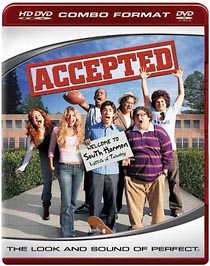
Since there are already prompts up for later posts I figured I should go ahead and answer the first one. So Black Mountain College, the home of artistic liberation and a sense of a community that seems to be so important in the Avante-Garde community. I can't begin to imagine the amount of drama that would have occurred at a place with so many artistic thinkers and ideas swimming about. While the idea is certainly sound and a great deal can be gained by throwing yourself into a situation like Black Mountain, I am not sure it would have been right for me.
My perfect day begins at noon. In which I slowly roll out of bed and then prepare myself a marvelous lunch. A lunch to end all lunches. Then I stick in a film and watch it and when it ends either get a snack or stick in another film and repeat until time for dinner or else bed. Without the constant reinforcements of some structure I don't think I would ever accomplish anything. While my artistic sensibilities of writing screenplays are something I would probably do anyway, without a sense of structure, I know that I would probably do nothing else but waste away. A raisin in a world of grapes. So, while I admire the faculty and students of Black Mountain College, I know myself too well to think that I could excel in such a place.
I have always wanted to be some kind of artistic-y, intellectual-y kind of person, but for some reason I always seem to come up just short of artistic brilliance and into the realm of mediocre. Perhaps a place like Black Mountain would be a good place to increase artistic skills. However, like I said, I just don't think its me.
I have one final thought on this whole Black Mountain College issue. And it is a stupid thought. Did anybody else think about the awful film Accepted?
Monday, January 14, 2008
Test Blog of Puppy

This is only a test. Had this been an actual post insightful commentary, criticism and a whole plethora of information would have appeared.
The picture to the left is of a puppy. It is a puppy because I say it is a puppy.
Subscribe to:
Posts (Atom)